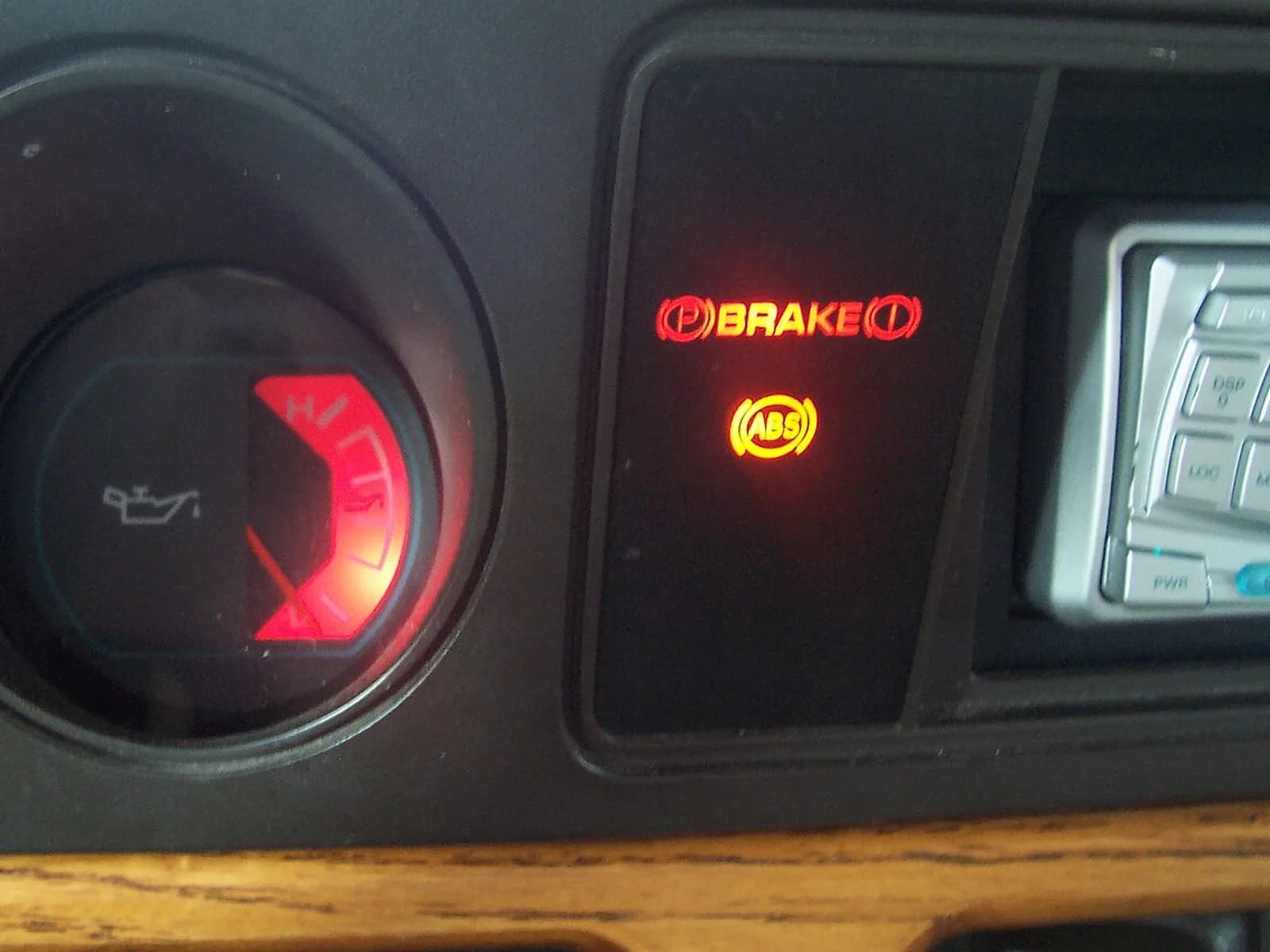
Can you drive with the ABS light on?
You can until the check, as long as you do not hear strange noises from the wheels. The brakes work as on a car without ABS.
The difference shows when you brake hard. The wheels can lock, the car slides and does not turn when you turn the wheel. This happens more easily on wet or icy roads.
ABS does not shorten the stopping distance, it keeps the steering while you brake hard.
Until the repair, keep a bigger distance and drive more carefully. While ABS is not working and you have to brake hard, press the pedal all the way, release it quickly and press it again, until you stop. That way the wheels do not lock.
The red brake light is a circle with an exclamation mark. When it is on together with the ABS light, the brakes may not work properly. Stop as soon as it is safe and do not drive on.
Why the ABS light is on: common causes
Each wheel has a sensor that tells the computer how fast the wheel is turning. The sensor reads a toothed ring or a magnetic ring that turns with the wheel. When the sensor of one wheel reports nothing or reports wrongly, the computer switches ABS off and turns on the light.
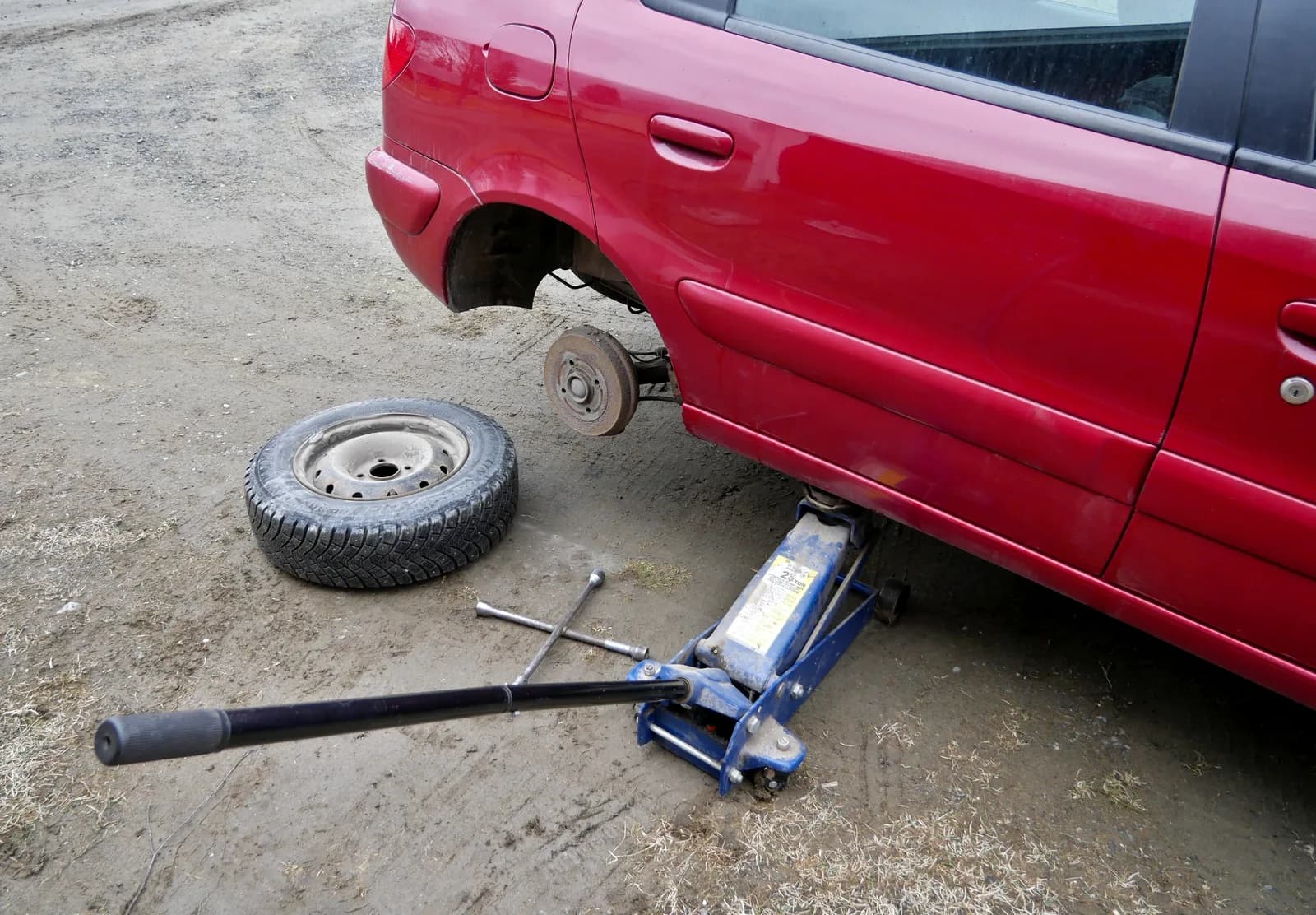 The wheel sensorIt sits right next to the wheel, so dirt and metal particles can collect on it. When it fails, the computer does not know how fast that wheel is turning.
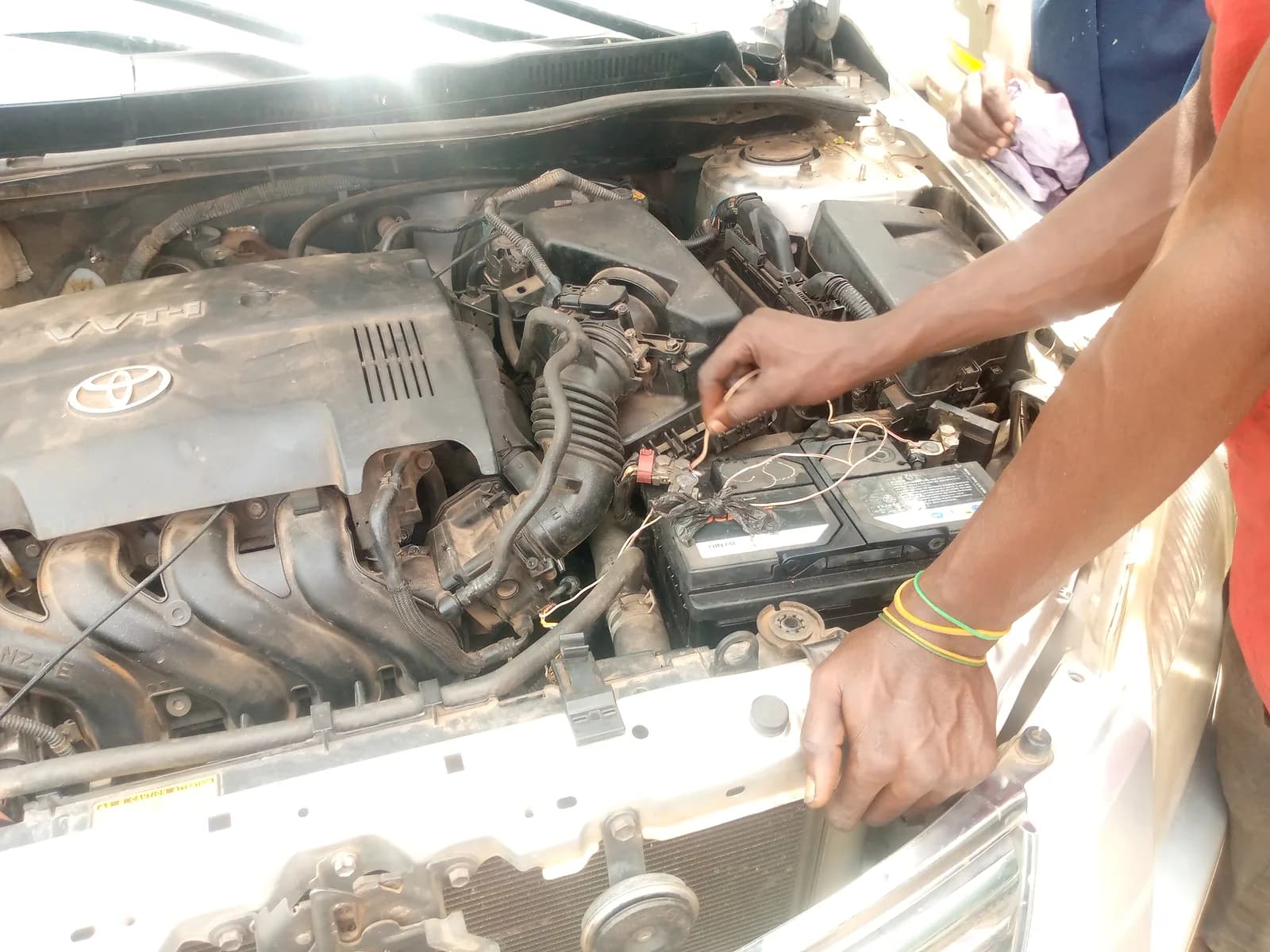 A weak batteryAfter a jump start, the ABS light can come on because of a weak battery, not because of an ABS fault. More about battery replacement
These causes are common too
- A dirty, rusty or damaged ring. Dirt and metal particles on the ring, or rust under it, spoil the signal. On some cars the ring is part of the wheel bearing, so the bearing is replaced along with a damaged ring.
- The sensor cable or connector. The connector is the plug that joins the sensor cable to the rest of the wiring. A break in the cable or a corroded contact in the connector causes a fault that comes and goes. More about the auto electrician
- Worn brake pads or low brake fluid. Then the red brake light can be on as well as ABS.
- The ABS computer or pump. The computer watches the sensors and controls the brakes when ABS works, and the pump restores the pressure in the brakes. A fault in them also turns on the light.
- Tyres of different sizes. ABS compares the speed of the wheels, and the tyre size decides how fast a wheel turns. That is why tyres of different sizes can upset how ABS and ESP, the anti-skid system, work.
Diagnostics first, then parts
The ABS computer stores the fault and the wheel it happened on, for example “right rear wheel sensor, erratic signal”. Without that, a good sensor is easily replaced and the light stays on, because the fault was in the cable or the ring. A tool that only reads engine faults does not see an ABS fault.
The ABS light comes on and off: the fault comes and goes
When the light comes on and off while you drive, the fault comes and goes: sometimes ABS works, sometimes it does not. A break in the cable, a corroded connector or dirt on the ring can cause this.
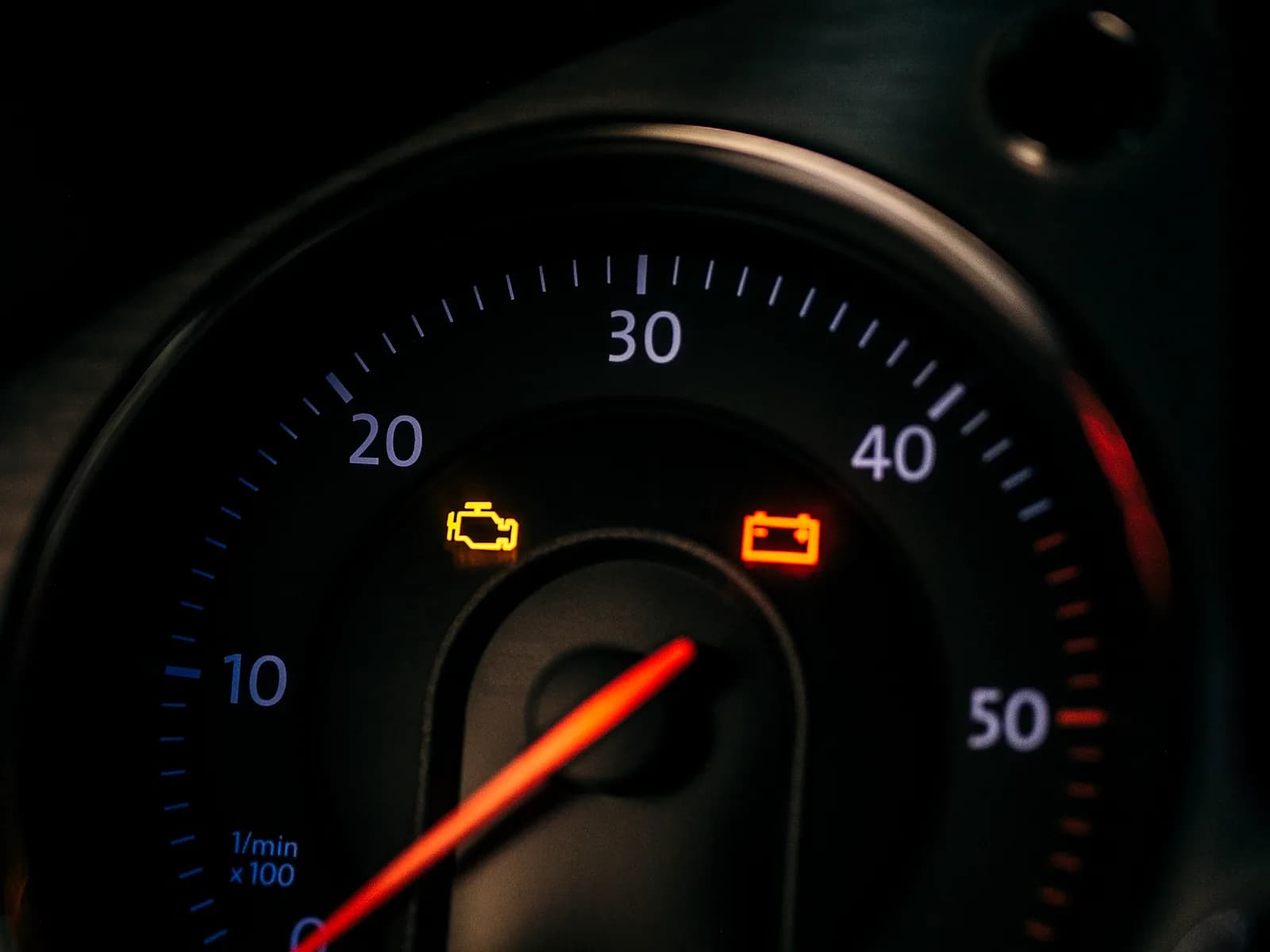
When you start the car, the ABS light comes on for about 3 seconds and goes off. This is the car checking the system, and it is not a fault. On some cars the computer only checks the sensors once the car moves. That is why a sensor fault can turn the light on only after the first few metres.
Do not wait for the light to stay on all the time. ABS can fail exactly when you brake hard.
The fault stays stored in the computer even when the light goes out, so diagnostics reads it. More about car diagnostics
ABS and ESP lights on together
ESP stops the car from skidding and cannot work without ABS. That is why you see two or three lights on the dashboard, even though there is one fault.
What else stops working depends on the car
- ESP and traction control: usually off.
- Brake assist, speedometer, heavier or lighter steering: on some cars.
An ESP light that flashes while you drive is not a fault. ESP is working then, for example on a slippery road. It is a fault when the light stays on.
The ABS light at the vehicle inspection
In the Serbian Rulebook on Vehicle Inspection, faulty ABS cables, sensors and warning light are listed among brake faults. So fix the fault before the inspection. Have diagnostics done a few days before the inspection, so we have time to fix what it shows.