Which antifreeze to put in your car: it is in the manual
The car maker sets which type of antifreeze the car needs and how much of it is mixed with water. This is written in the owner’s manual. The antifreeze must meet that standard.
The names G11, G12, G12+, G12++, G13 and G12evo are Volkswagen and Audi standards. Other makes have their own standards, and those are written in the manual.
Names and colours: G11, G12, G12+, G12++, G13 and G12evo
Each next name is a newer type of antifreeze. Volkswagen replaced the older types with newer ones. From model year 2019 it fills cars with G12evo at the factory.
| Name | Colour at Volkswagen |
|---|---|
| G11 | Blue-green |
| G12 | Red |
| G12+ | Purple |
| G12++ | Purple |
| G13 | Purple |
| G12evo | Purple |
Which antifreeze can be mixed and which cannot
When G11 and G12 are mixed, acids and lumps form in the fluid. The acids eat into engine parts and the lumps block the narrow channels, so the engine can overheat and be damaged.
All other types can be topped up with one another. When you add a type listed next to your name in the table, the fluid protects as before. With other types the fluid protects less well against rust.
| In the car | Top up with, no loss of protection |
|---|---|
| G11 | G11, G12+, G12++, G13 or G12evo |
| G12 | G12, G12+, G12++, G13 or G12evo |
| G12+ | G12+, G12++, G13 or G12evo |
| G12++ | G12++, G13 or G12evo |
| G13 | G12++, G13 or G12evo |
| G12evo | G12evo |
The car maker advises changing all the fluid after mixing, because a mix protects less well against rust. The exception is G12++ and G13, which mix with no difference.
The colour does not tell you which antifreeze is in the car
There is no common rule for the colour of antifreeze, so the same colour does not mean the same type. Antifreeze can be green, blue, yellow, pink, red, purple or even clear.
When G11 is mixed with G12+ or a newer type, the fluid turns brown. The car maker says this is normal.
Without a special test of the fluid, you cannot reliably know which type is in the car. When you do not know what was poured in, the safest thing is for us to flush the system and fill it with the right antifreeze.
When antifreeze is changed
The interval for changing it is in the service book.
When antifreeze is changed: it depends on the type
- G12+, G12++ and G13 at Volkswagen and Audi: lasts the life of the car, but only as long as it is not mixed with another type.
- Older antifreeze with silicates, the kind used in older cars: usually changed every 2 to 3 years.
Antifreeze is also changed before the interval:
- When several types are mixed in the car, because a mix protects less well against rust.
- When the radiator, the pump or another part of the cooling system is replaced.
- When the wrong type was poured in or nobody knows which type is in the car.
How we change antifreeze
When the car had another type or a mix, we drain the old fluid, flush the system and fill it with antifreeze to the standard, mixed with distilled water. Then we measure down to what temperature the fluid protects against freezing.
The price depends on how much fluid your engine takes, which type it needs and whether the system needs flushing.
How to check the antifreeze level
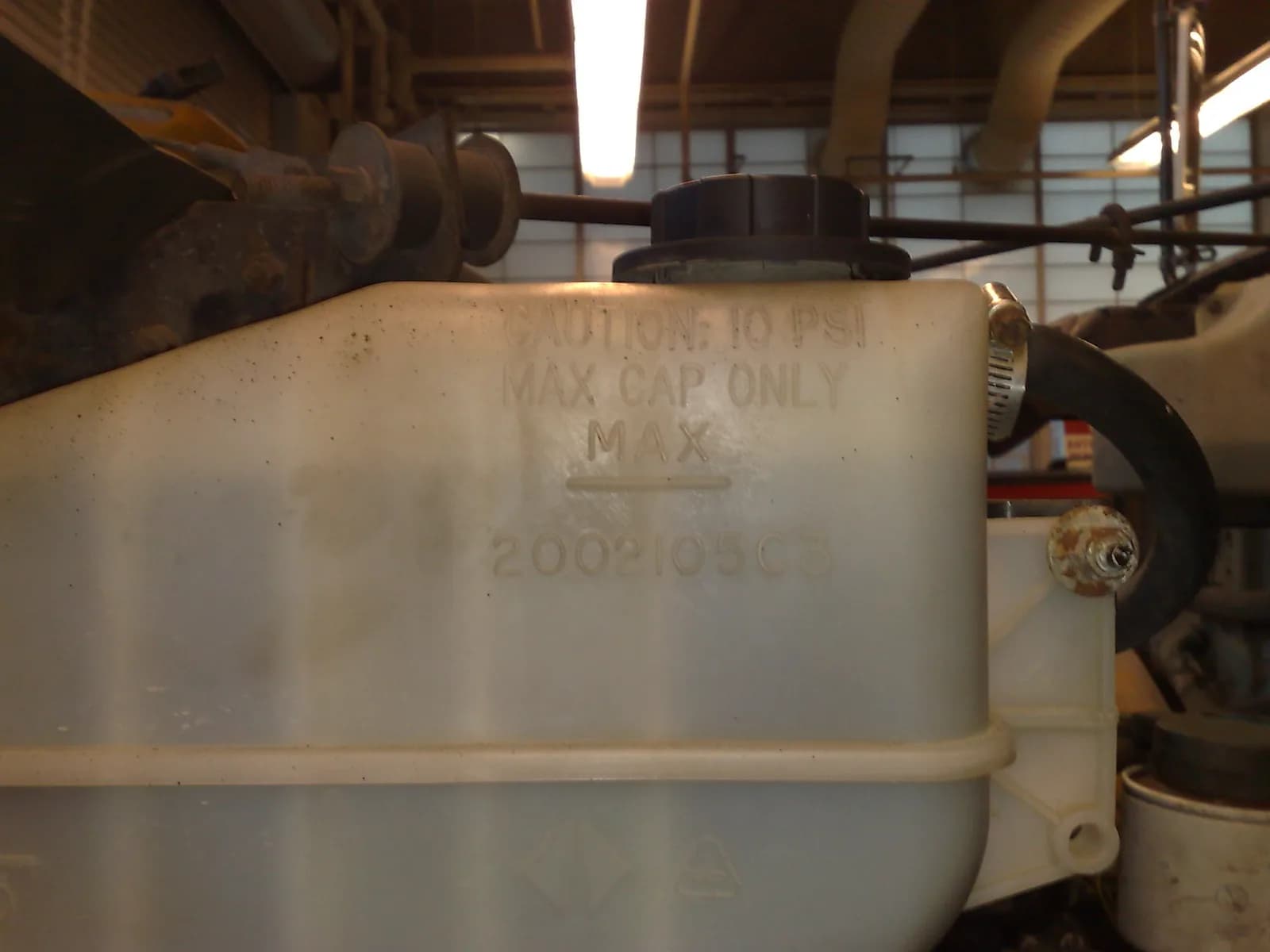
On most cars antifreeze is in a clear plastic tank under the bonnet. The cap usually says "coolant" or shows a thermometer in liquid. Check the level when the engine is cold, at least 30 minutes after switching it off.
Make sure you have the right tank. Antifreeze poured into the screenwash, brake fluid or power steering tank can cause damage. Where the antifreeze tank is on your car is shown in the car's manual.
The fluid should be between the MIN and MAX marks on the tank.
Do not open the cap while the engine is warm, because hot fluid under pressure can scald you.
If the fluid is below MIN, with the engine cold, top up with the type of antifreeze from the manual, mixed with distilled water as the manual says, until the level is between MIN and MAX.
Check the level at least twice a year, before winter and before summer. In summer the engine runs hotter, and a fault in the cooling system may show only on a long trip with a full car.
The antifreeze level should not drop. Most modern cars have a sealed cooling system, so fluid that disappears is leaking somewhere.
Signs that antifreeze is leaking or low
- The temperature gauge reads higher than usualFluid may be missing. The cause can also be the thermostat, the pump or the fan.
- An amber temperature light comes onThe fluid level is low.
- A red temperature light comes onThe engine is overheating or the fluid is below the minimum. Stop and do not open the tank while the engine is warm.
- The heating blows cold airThere may be too little fluid in the system.
- A patch is left under the front of the carThe fluid is leaking, most often from the radiator.
- There is a sweet smell around the carAntifreeze smells sweet, so you can tell it apart even when it is clear.
- The hoses have wet or white marksA leak may start there.
With too little antifreeze the engine can overheat. Overheating can damage the fan, the head gasket or the whole engine. While the fluid is leaking, do not go on a long trip. The leak is found and repaired, and the system is filled with the right antifreeze. More about dashboard warning lights