
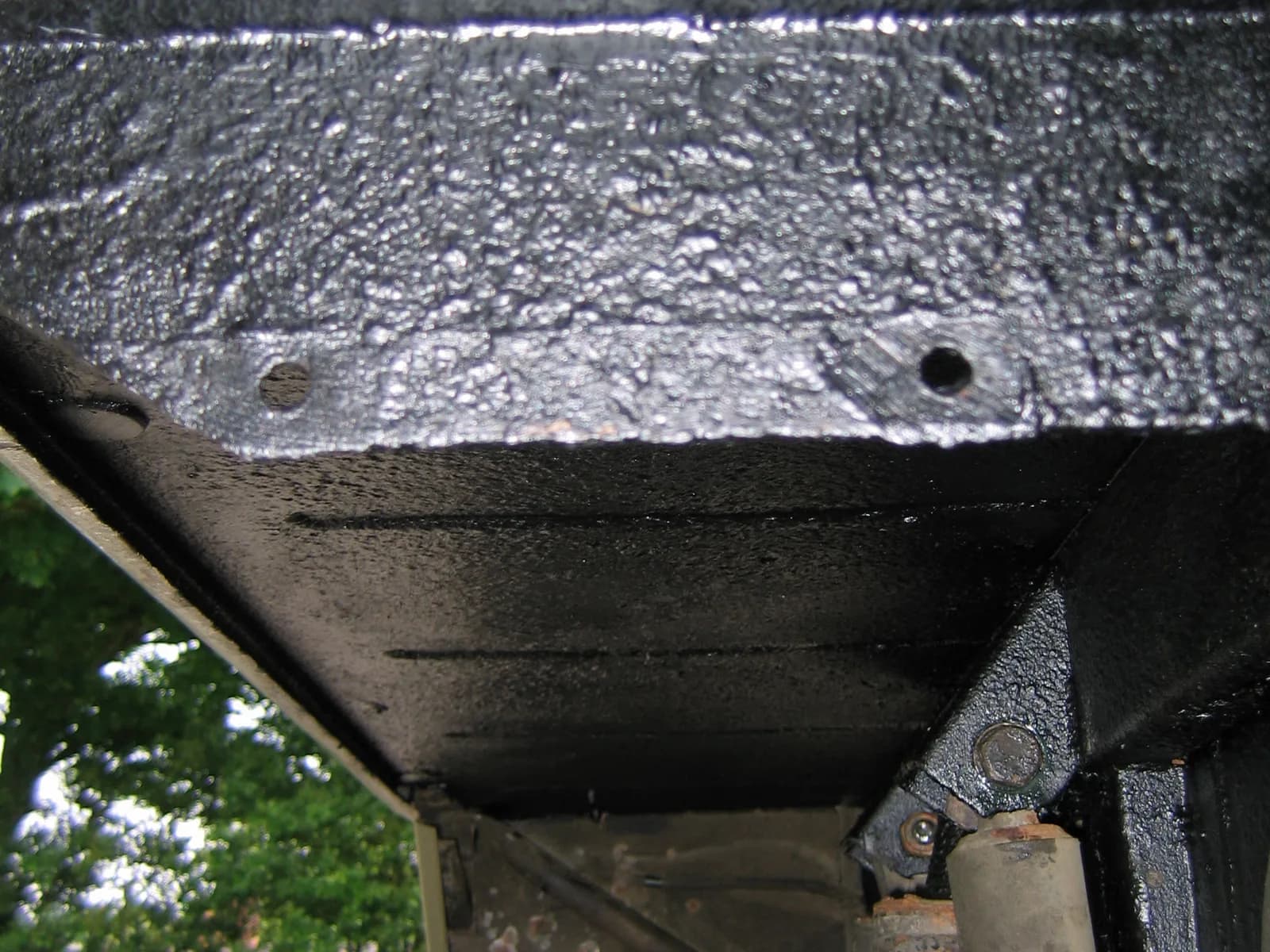
Salt and moisture eat the metal from below
Rust forms when water and air reach the metal. Road salt speeds it up. For the state roads alone, Serbia's road company Putevi Srbije stocked 75,000 tonnes of salt last winter.
Stones and age wear away the paint and protective layer, leaving the metal exposed. Driving on gravel roads and through puddles speeds rust up even more.
Under the car, rust is noticed last. It often starts on the inner side of the metal and only later shows on the paint.
Rust on the underbody weakens the load-bearing parts, so the car becomes less solid. It can also lead to brake fluid leaks.
When a car needs rustproofing
- The car is 6 to 8 years old or moreFactory underbody protection wears off over time. It is renewed after 6 to 8 years at the latest, and sooner on a car that often drives on salted roads in winter or on gravel.
- The car has been in an accident or had bodywork repairsWhere the protection is damaged or the metal was left without it, rust starts.
- The old underbody coating has cracked, gone brittle or is falling offWater gets in under it. Brown spots on the coating mean rust has already started underneath.
- A bubble under the paintWater and air have got between the paint and the metal, and rust will soon break through.
- A wet carpet in the cabin or bootThe metal under the carpet has usually already rusted.
Where rust most often starts
- The sills and frame rails under the doors, on both sides of the car.
- The wheel arches, especially on older cars without plastic liners.
- The exhaust, because moisture attacks it from inside and outside, and mud holds it there.
- Suspension parts, because the wheels throw mud and water at them.
- The boot floor, under the carpet.
- The metal around the windows, because water easily leaks in there.
- The doors, outside and inside.
How rust progresses and when it fails the roadworthiness test
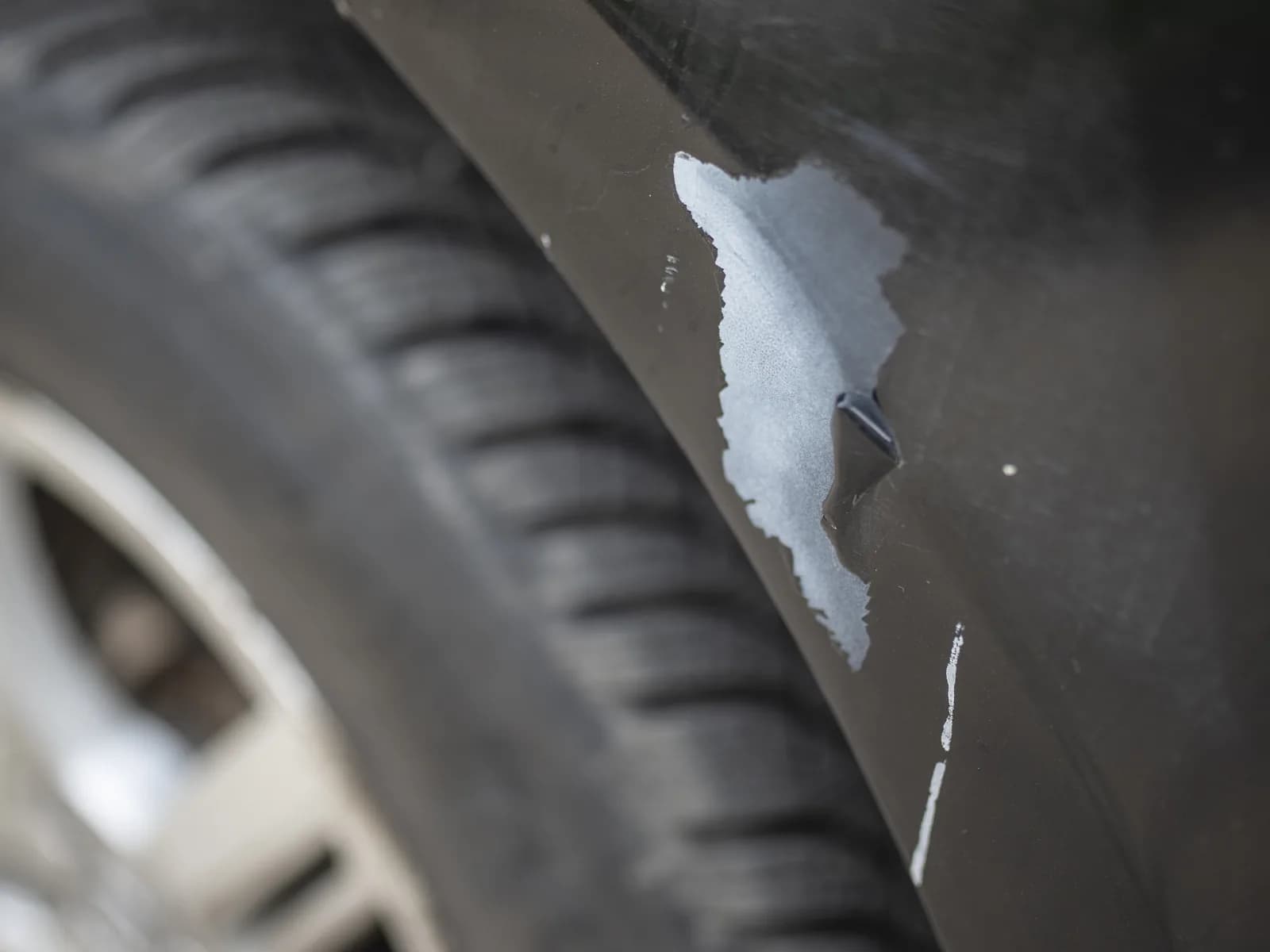 A brown spot on a scratch or dentThe rust is only on the surface. This is when it is easiest to stop.
- The metal under the paint is flakingThe rust has got into the metal, and salt eats it even faster there.
- A hole in the metalThe part probably has to be replaced.
Surface rust does not fail the roadworthiness test in Serbia. The Rulebook on Vehicle Roadworthiness Testing lists as a defect deep rust on the load-bearing parts of the body, the chassis and the floor, and rust that has made a hole. With such rust the car is not certified until it is repaired. Protection done in time keeps exactly those parts safe.
How rustproofing is done
Before protecting the car, we remove the plastic covers, wash and fully dry the car and take off flaking rust. We spray following the drawing for your model, so as not to damage electrical parts and airbags. First the wax goes into the cavities, then the protective coating onto the underbody.
Wax or bitumen for the underbody
- WaxIt is transparent. It stays soft and creeps into corners and joints, so it keeps moisture out well. It handles stone chips less well.
- BitumenA thick coating made from oil, not transparent. It is hard and handles stones and gravel roads better. Over time it cracks, water gets in under the coating through the cracks, and the metal underneath rusts.
What the price of rustproofing depends on
- Underbody only, or cavities too. Cavity protection is a separate job.
- How much rust has to be removed. The more rust, the more work before coating.
- The old coating. When it has cracked, we remove it before the new one, and that takes a lot of work.
- The whole floor or just part of it. Sometimes we renew only the damaged area.
- A rust hole. Then we repair the metal first, and only then do the protection.
How to make the protection last longer
- In winter, wash the car once a week, underneath too, because salt stays under the car. At a car wash choose the underbody wash, or wash the underside yourself with a pressure washer. More about preparing your car for winter
- An underbody wash does not replace protection. It removes the salt, but after the next drive on a salted road the metal is exposed again.
- Scratches and dents: fix them in time, because rust starts on them.
- Garage: park the car in one when you can.
- Look at the underbody every time the car is up on a lift: look for cracked coating and brown spots on it.
Rust on a used car before you buy
A patch of paint that differs from the rest of the car may be repaired rust. If the repair was not done well, the rust comes back. Surface rust is easy to fix. Rust that has gone deep into load-bearing parts means a major repair and a failed roadworthiness test. When you find rust, ask the seller to lower the price of the car by the cost of the repair. More about checking a used car